Compound reference
BPC-157
Short synthetic peptide · Updated
A short synthetic peptide, among the more heavily published compounds in laboratory tissue-repair research.
Identity
- Sequence
- Pending
- Molecular formula
- Pending
- Molecular weight
- Pending
- CAS number
- Pending
Marked pending rather than filled in from a secondary source. These figures will be published when they come from our own analysis, so that this page and the certificates agree.
Published research areas
Fields in which this compound appears in the published literature. These describe where the research sits, not what it concluded.
- Tissue repair models
- The largest body of published work, spanning connective tissue, muscle and gastrointestinal models in animals.
- Angiogenesis studies
- Investigated in models examining the formation of new blood vessels.
- Gastrointestinal research models
- The compound was originally characterized from gastric juice, and much early work sits in this area.
What the analysis should cover
- Identity by mass spectrometry, since purity alone establishes nothing about which molecule is present.
- Purity by HPLC with the chromatogram reproduced, not only the percentage.
- Net peptide content, which determines how much of a weighed mass is actually peptide.
- Salt form and residual counterion, which most certificates omit.
How to read a certificate of analysis covers what each of these measurements establishes.
Handling and stability
- Supplied freeze-dried and sealed, which removes the water that drives the main degradation routes.
- Residual moisture by Karl Fischer is the figure that most directly predicts how long sealed material keeps.
- Stored cold, dry and dark in the sealed container as supplied.
Why peptides ship freeze-dried sets out the reasoning behind these conditions.
Supplied by us
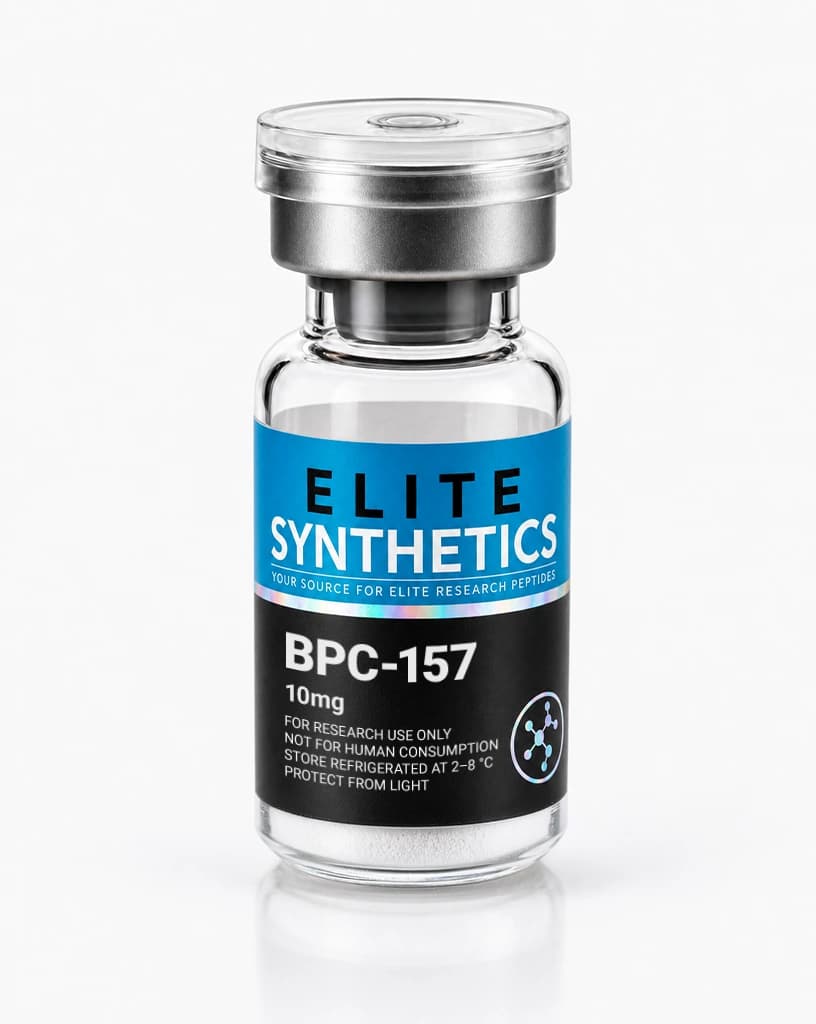
BPC-157 is a fifteen-amino-acid peptide, widely used in laboratory research. Ships freeze-dried in a sealed 10mg vial, with the analysis for its own lot.
View BPC-157