Compound reference
TB-500
Synthetic peptide fragment · Updated
A synthetic fragment corresponding to part of thymosin beta-4, a naturally occurring protein.
Identity
- Sequence
- Pending
- Molecular formula
- Pending
- Molecular weight
- Pending
- CAS number
- Pending
Marked pending rather than filled in from a secondary source. These figures will be published when they come from our own analysis, so that this page and the certificates agree.
Published research areas
Fields in which this compound appears in the published literature. These describe where the research sits, not what it concluded.
- Cell migration studies
- The parent protein is studied for its role in actin regulation, and cell migration is a substantial part of the published literature.
- Tissue repair models
- Investigated alongside other compounds in laboratory repair models.
- Actin binding
- The fragment corresponds to a region of the parent protein associated with actin interaction, which is the mechanism most of the structural work examines.
What the analysis should cover
- Identity by mass spectrometry, which distinguishes the intended fragment from related sequences.
- Purity by HPLC with the trace published.
- Net peptide content, particularly relevant where a known input mass is required.
- Salt form, since counterion contributes materially to the weighed mass.
How to read a certificate of analysis covers what each of these measurements establishes.
Handling and stability
- Supplied freeze-dried and sealed.
- Residual moisture governs how long sealed material stays as analyzed.
- Stored cold, dry and dark in the container as supplied.
Why peptides ship freeze-dried sets out the reasoning behind these conditions.
Supplied by us
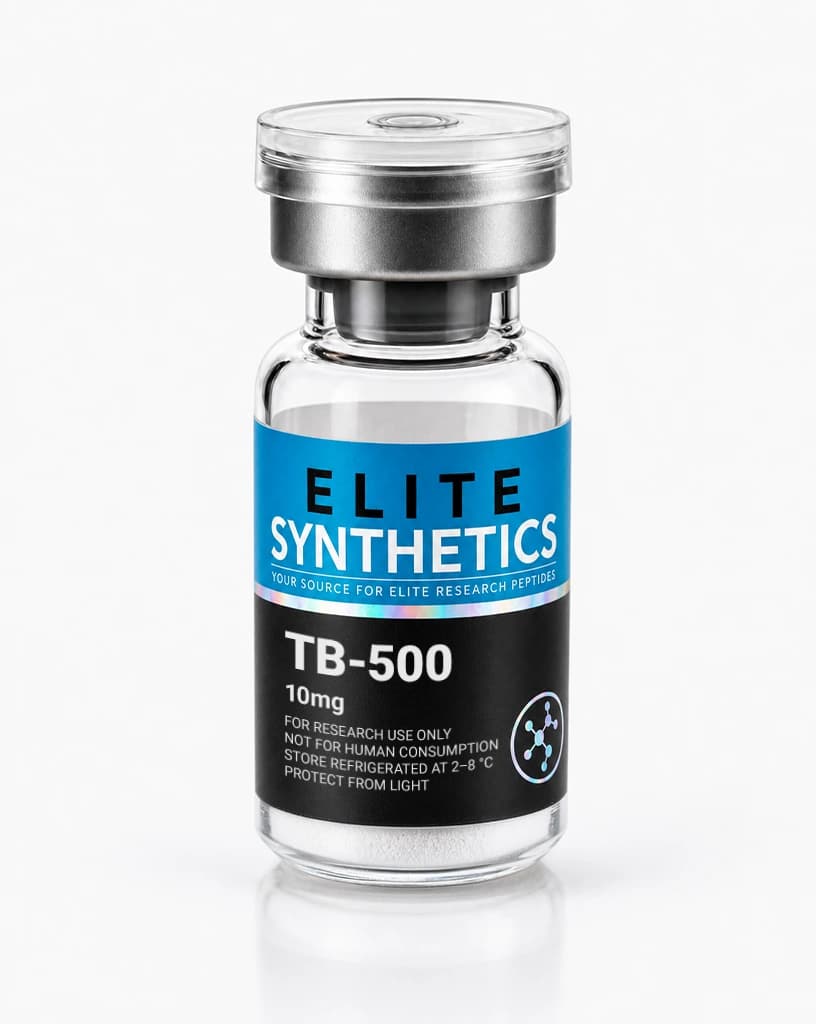
A synthetic fragment of thymosin beta-4, freeze-dried and sealed in a 10mg vial. Used in tissue-repair and cell-migration research, and in assay work where a known input mass matters. Every lot ships with its own certificate of analysis.
View TB-500